





Oenology. Innovations and Novelties
Cod produs:121538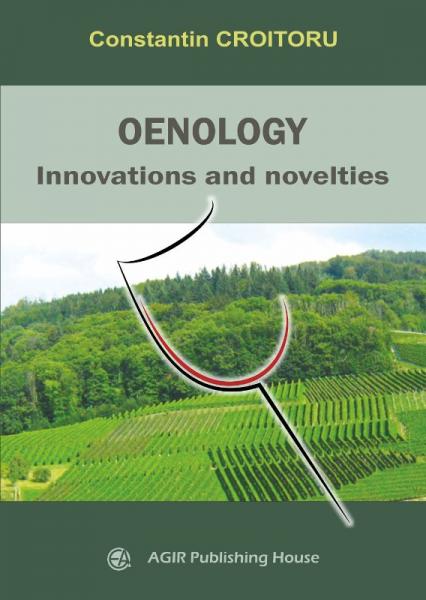
 Autor
Autor
|
Constantin Croitoru |
|---|---|
 Editura
|
A.G.I.R. |
 Format
|
17×24 cm |
 Nr. pagini
|
340 |
 Coperta
|
brosata |
 ISBN
ISBN
|
978-973-720-464-6 |
 Anul aparitiei
|
2012 |
50,91 lei
In stoc
Descriere Oenology. Innovations and Novelties
PREFACE
This book highlights the most representative papers of the author`s research and concerns in the domains of oenology, marketing and promotion of wines in the most prestigious international competitions. The papers refer to some research work contained in his thesis and the results of experiments conducted with products for elaboration and maturation of wines that have revolutionized oenology in the recent years and that have been presented at international scientific reference manifestations in Romania and abroad.
These technical and scientific achievements represent a major part of the author’s professional and extra-professional work, who has been awarded twice the Award of the International Organization of Vine and Wine (OIV) as sole author in the oenology category (Special Mentions in 2007 and 2010).
The book was published in Romanian (mother tongue), but also in French and English, being in full accord with recent OIV requirements, but also with the current trends of globalization of socio-economic processes. It seeks to highlight the innovation and novelty that accompanied the development of oenology from its highly curative traditional character to its current profoundly preventive character.
It is divided into seven parts comprising 20 chapters and ends with some conclusions and recommendations, together with references. The first part is the largest one and refers to a new revolution in the elaboration of wines; it begins with a comprehensive chapter on some recent progress on elaboration products for wines (enzyme preparations, yeasts and selected malolactic bacteria, yeast derivatives, tannins, gum Arabic), it continues with a chapter that includes the main elaboration biotechnologies for wines (with a separate subchapter for Sauvignon blanc) and it ends with a chapter on organic wines. The second part deals with a new direction in wine maturation (alternative oak products) in comparison to traditional maturation (in oak barrels). The third part of the book addresses the technological innovations of the past 30 years in reducing the acidity of musts and wines, to which the author has made an outstanding contribution through his own research (deacidifying of harvests rich in malic acid, valorisation of harvest with excess of tartaric acid, reduction of acidity by double metabiosis, citric acid metabolism, …). In the fourth part are highlighted some of the permanent concerns governing the wine world, to which the author has brought new and valuable contributions over time (removal of heavy metals from red wines, valorisation of by-products from wine winemaking such as distillery vinasse, reduction of alcohol content in wines). The fifth part aims at the analytical control of wines and includes innovative and new features regarding the determination of alcoholic concentration of wines and spirits with sugars residues. At its turn, the sixth part named “From classic to current practice in wine marketing” includes a chapter on the marketing of a new wine product in the ‘90 of the last century and last millennium (author’s paper to complete the courses to obtain Higher Certificate in wines, Spirits and Liqueurs, awarded by the National Specialized Institute, The wine and Spirit Education Trust in UK) and a short chapter on online marketing and promotion of wines. The last part of the book addresses the issue of international confrontation of wines and presents the analysis of a contest with technical comments on statistical issues; it is followed by a radiography of the 2011 editions of the most important global wine tasting competitions in which the author participated in the jury.
Through the content of this book, the author shows that it is one of the pioneers in innovation and permanent novelty for Romanian wine production, a lover of progress with avant-garde tendencies by promoting wines marketing and promotions on the Internet and a dynamic animating and enhancing factor for the participation with samples of Romanian wine producers in the greatest international tasting confrontations.
The author
CONTENTS
PREFACE
LIST OF ABBREVIATED TERMS AND PHRASES
Part I A NEW REVOLUTION IN WINEMAKING
1. Products for elaboration of wines. Some recent progresses
1. 1 Novelties regarding enzymatic preparations used in oenology
1. 1. 1 New aspects regarding basic notions
1. 1. 2 Use of enzymatic preparations in white winemaking
1. 1. 2. 1 Enzyme action in contact with grape skins
1. 1. 2. 2 Enzymatic action on the static clarification of must
1. 1. 2. 3 Enzyme preparations and flotation technique
1. 1. 2. 4 Enzymatic preparations and the typical varietal aromas of white grape varieties
1. 1. 2. 5 Enzyme preparations and wine filtration
1. 1. 2. 6 Enzymatic preparations and aging of wines on the fine lees sediment
1. 1. 3 Special enzymatic preparations
1. 1. 3. 1 Enzymatic preparation against mold
1. 1. 3. 2 Enzymatic preparation against Brettanomyces yeasts
1. 1. 3. 3 Conclusions
1. 2 Innovations in the domain of selected yeasts for winemaking
1. 2. 1 Selected strain yeasts multiplied on grape must
1. 2. 2 The emphasis of the typical varietal profile of the Sauvignon blanc variety by the selection and use of a yeast strain with superior biological characteristics
1. 3 New achievements in the strains selection of malolactic bacteria. Cocultures of selected strains of the Oenococcus oeni species
1. 4 Technological and ecological aspects in testing of biological products in winemaking
1. 4. 1 Experimentation techniques for enzymatic preparations
1. 4. 1. 1 Experimental protocol for comparative testing of some enzymatic preparations for extraction and clarification of grape musts
1. 4. 1. 2 Experimental protocol for comparative testing of some enzymatic preparations with b – glucanase activity
1. 4. 1. 3 Comparative testing of enzymatic preparations with beta-glucosidase activities
1. 4. 1. 4 Comparative experimental study for testing enzymatic preparations for maceration and pressing in red winemaking
1. 4. 2 Techniques for use of selected active dry yeasts (SADY)
1. 4. 3 Techniques for utilization of selected malolactic bacteria (SMB)
1. 4. 4 Conclusions
1. 5 New technological and practical issues regarding the use of yeasts derivatives in winemaking
1. 5. 1 Notion definition and constrains related to quality
1. 5. 2 Diversity of extracted constituents from yeast cell
1. 5. 3 Mode of action
1. 5. 4 Importance of treatments applied to musts and wines
1. 5. 5 Aspects on the practice of treatments with yeasts derivatives
1. 5. 6 The importance of dose selection
1. 5. 7 Yeast derivatives in the concept of modern wine
1. 6 The tannins in oenology. Present and future
1. 6. 1 Diversity. Properties, the importance of their use in the treatment of wines
1. 6. 1. 1 Defining concepts of tannin and tannin in the oenological context and that of current regulations
1. 6. 1. 2 Parameters which determine the quality of tannins
1. 6. 1. 3 Composition of oenological tannins
1. 6. 1. 4 Properties of tannins
1. 6. 1. 5 Importance of treatment with tannins
1. 6. 1. 6 The practice of treatments with tannins
1. 6. 1. 7 Importance of reshaping the wine sensorial structure
1. 6. 1. 8 Tannins and current concept of modern wines with a reproductible sensorial quality
1. 6. 2 Incidence of the treatment with oenological tannins on the red wines’ sensorial profile
1. 6. 3 Oenologic tannin coupled with a molecule of acetaldehyde
1. 7 Arabic gum and his effects on the quality and stabilisation of wine
2. Biotehnologies for elaboration of wines
2. 1 Winemaking technologies between tradition and innovation
2. 1. 1 Typicity and authenticity versus frutiness and expressivity
2. 1. 2 "Traditional" and "interventionist" technologies
2. 1. 3 The bridge between tradition and innovation
2. 1. 4 Conclusions
2. 2 Biotechnologies for white winemaking
2. 3 Biotechnologies for red winemaking
2. 4 The particular case of the elaboration technology of wines from Sauvignon blanc variety
2. 4. 1 Introductory elements
2. 4. 2 Vintage quality
2. 4. 3 Vintage processing stage in order to obtain the must
2. 4. 4 Pre fermentative processing stage of the must
2. 4. 5 The fermentative stage. AF of must
2. 4. 6 The post fermentative stage. The conservation of odorant heritage
2. 4. 7 The current global typology of Sauvignon blanc wines
3. Organic wines. The pros and cons. legal, technological and sensorial aspects. Perspectives and limits in consumer’s preference view
Part II A NEW TREND IN WINE MATURATION. ALTERNATIVE OAK PRODUCTS
4. Aspects regarding the classic maturation of wines in oak barrels
5. Aspects regarding the composition of oak wood and its influence on the sensorial profile of wines
5. 1 Composition and characteristics of oak alternative products depending on the applied thermal regime
5. 2 Evolution of sensorial profile of wines after the treatment with oak alternative products
6. The influence of technological factors on the composition and quality of alternative products upon maturation of wines
6. 1 Types of alternatives. The influence of the oak origin and processing techniques, drying and maturation
6. 1. 1 Introduction
6. 1. 2 Development of alternative solutions to the maturation of wines in oak barrels worldwide. Study case of US wines
6. 1. 3 The characterization of the main types of alternative products
6. 1. 4 The influence of the used oak origin
6. 1. 5 The influence of the oak sawing technique
6. 1. 6 Oak drying and maturation
6. 1. 7 Conclusions
6. 2 The influence of the thermal treatment conditions. Aspects of the use of different types of alternative products
6. 2. 1 The influence of the thermal treatment conditions of oak
6. 2. 2 Aspects of using various types of alternative products to maturation in barrels
6. 2. 3 Forecast on the future evolution of alternative products
Part III REDUCTION OF MUSTS AND WINES ACIDITY. TECHNOLOGICAL INNOVATIONS IN THE LAST 30 YEARS
7. Valorisation of harvests from red and white varieties with high content
of malic acid by biological deacidifying through mlf with Lactobacillus plantarum
8. Valorization of vintages with high content of tartaric acid. Classic and unconventional methods and procedures
8. 1 Innovative classic methods for reduction of acidity in musts and wines
8. 1. 1 Comparative experimental study regarding the chemical deacidifying of over sulphited musts
8. 1. 2 Getting substitutes for RCM by double chemical and biological deacidifying
8. 2 Unconventional procedures for reduction of musts and wines acidity
8. 2. 1 Experiments to obtain substitutes for RCM dialysis and electrodialysis
8. 2. 2 Experiments to obtain substitutes for RCM by ultrasonation and refrigeration
8. 2. 3 Obtaining RCM substitutes through ion exchange technique
9. Reduction of excessive acidity of white wines coming from early harvests by double metabiosis
10. Citric acid, diacetyl, butter character and sensorial profile of some wines from white varieties. theoretical, experimental and sensorial approach
11. MLF again in specialists` attention with new technical-scientific approaches
11. 1 Aspects concerning MLF of the white wine making
11. 1. 1 Some preliminary conditions
11. 1. 2 The SMB selection
11. 1. 3 The nutrient selection
11. 1. 4 Comparative study on the state of MLF onset in white wine making
11. 1. 4. 1 Triggering through co-inoculation
11. 1. 4. 2 Triggering MLF through precocious inoculation
11. 1. 4. 3 Triggering MLF through sequential inoculation
11. 1. 4. 4 Triggering MLF through staggered inoculation
11. 1. 4. 5 Conclusions
11. 2 Aspects concerning the MLF of the red wine making
11. 2. 1 The opportunity to accomplish MLF with SMB
11. 2. 2 Current techniques for SMB utilization at MLF accomplishment
11. 2. 2. 1 The co-inoculation technique
11. 2. 2. 2 Precocious inoculation technique
11. 2. 2. 3 Sequential inoculation technique
11. 2. 2. 4 The tardy inoculation technique
11. 2. 3 Advantages instead of conclusions!
11. 2. 4 Reactivation protocol of SMB
11. 2. 5 Managing the progress and the completion of MLF with SMB
11. 2. 6 Advantages insted of conclusions!
Part IV SOME CONCERNS IN THE WINEMAKING WORLD. REMOVAL OF HEAVY METALS, VALORIZATION OF BY-PRODUCTS AND REDUCTION OF ALCOHOL CONTENT IN WINES
12. The metallic stabilization of red wines
13. Development of a valorization process distillery plonk as a natural food acidulant
13. 1 Choosing the technological process for metallic and tartaric stabilization of plonk
13. 1. 1 Choosing the tartaric stabilization process for plonk
13. 1. 2 Selection of metallic stabilization procedure of plonk
13. 2 Experimental approach to validation of a new unconventional technology
14. A new sanogene beverage from red wine and malt must
Part V ANALYTICAL CONTROL OF WINE. INNOVATION AND NOVELTY IN DETERMINATION OF ALCOHOLIC CONCENTRATION
15. The simplifying of some determination methods for alcohol in wines and distilated alcoholic beverages that contain sugars
16. New progress in determination of alcoholic concentration of beverages using a potentiometric biosensor
Part VI FROM CLASSIC TO CURRENT IN WINE MARKETING
17. Presentation of the marketing of a new wine product in the ‘90s
17. 1 The new romanian wines a possible recognition and expansion on the international market?!…!
17. 2 OLTINA & PARTNER… or… the miracle of simple technology and professional competence
17. 3 Technological chart of elaboration a new wine product
17. 4 Elaborated label types
17. 5 Types of messages for back-labels
17. 6 Oltina, new land of Romanian wines
17. 7 The path to Oenogastronomy
17. 8 Presentation of the new „OLTINA & PARTNER” product
18. About wine marketing and promotion on the internet
Part VII INTERNATIONAL CONFRONTATION OF WINES.
INFLUENCE INCREASE OF WINE TASTING CONTESTS IN CONSUMERS’ VISION
19. Analysis of a wine competition. The 2011 edition of Mondial du Merlot. Technical comments to statistical aspects
19.1 Aspects regarding the correlation vintage year – awarded medals
19. 1. 1 A few technical considerations
19. 1. 2 Favourable… and unfavourable exceptions
19. 1. 3 Which sensorial characteristics matter the most?!
19. 2 Classifications on medals types
19. 3 Aspects regarding the correlation samples’ quality – awarded medals
19. 4 The positioning of Romania between the current statistical reality and the predictions on future performances!
20. Aspects regarding international wine competitions … and the romanian presence. A DIonysian, oenogastronomical and oenotouristical journey in Europe and America
20. 1 VInalies internationales 2011: Recas winery and… a spectacular dry white wine!
20. 2 Vinitaly 2011: Between the bachic aspirations and gastronomical pleasure!
20. 3 Grands Concours du Monde 2011: Oenotouristical demands and oenogastronomical pleasure between tradition and innovation!
20. 4 Concours Mondiale de Bruxelles 2011: Permanent originality, accompanied by a continuous increase of the confrontation!
20. 5 SYRAH du Monde 2011: as powerful as the Mondial du Pinot Noir and Mondial du Merlot!
20. 6 Mondial du Sauvignon 2011: A typical XXI century bacchic confrontation!
20. 7 Citadelles du Vins 2011: Recognition of excellence through professionalism, competence, rigor and ingenuity!
20. 8 selections Mondiales des Vins 2011: A unique opportunity to promote European wines both in competition and at special events!
20. 9 Mundus Vini 2011: an international gauge dominated by prestige, competence and punctuality
20. 10 Vinandino 2011: nostalgia and regrets for charming Argentina and the warmth of the South American “brothers”
20. 11 Instead of Conclusions: Let’s all learn how to take what is good from others and adapt it to our conditions!
CONCLUSIONS AND RECOMMENDATIONS
REFERENCES
Produse similare
Valorificarea laptelui de capra. Ghid practic pentru fermieri
In stoc


